4 DIY Maintenance Tips For Your Home Sewer System

Although it constitutes a rather unsavory section of the home plumbing system, a sewer system is one of the most hygienic components in the entire household. The home sewer system forms the final portion of the three-tiered home plumbing system, which includes the water supply section, the water usage and storage portion, and the sewer and drain section. Incidentally, almost everything about the sewer system is shrouded in mystery — from its physical location (underground) to its operational dynamics, the sewer system is perhaps the most inscrutable component in a typical home plumbing system.

Although we rarely consider the functional and structural nature of our home sewer system, we suffer distasteful lessons anytime there is a sewer breakdown. Sewer problems range from minor clogging problems to burst sewer tanks. Although you can fix some minor sewer issues like simple, plunger-responding clogs, you are advised to consult a professional plumber in your locality as soon as possible for major sewer problems like sewer tank leakages. For instance, if you live in Washington, you can consult and hire any reputable plumber, who advertises professional sewer services in DC, in order to get the problem fixed. Also, you can prevent many sewer system problems by practicing the following simple home maintenance tips.


Flushing Restrictions
 

sewer-services-dc


Sewer lines are designed for the disposal and flushing of waste water, human waste, and toilet paper — ONLY! Avoid flushing paper wrappings and diapers, sanitary napkins, and any other hygiene products down the toilet; dispose of them in the garbage. Even if the packaging claims that these items are flushable, beware that they can clog sewer pipes and cause extensive problems to the sewer system.


Protect The Sewer Line From Root Clogging


Sewer pipes are easily clogged by root invasion from trees, shrubs, and other plants growing too close to the sewer line. In addition to their roots growing into or around the sewer pipes and clogging them, crowding plants make it difficult to maintain sewer lines. As such, avoid planting any plants near the home sewer line and cull any wild plants growing near the sewer line. It is also advisable to inspect the sewer system regularly — look out for signs of root clogging in sewer lines, such as odd gurgling sounds or black back-streaming drainage water in sinks and showers.


Enzyme Drain Cleaners


One of the simplest and most effective DIY sewer maintenance activities is the physical cleaning of drain pipes once a month. In order to clear your drain pipes, you are advised to clean them using enzyme cleaners instead of chemical-based cleaners every month. In addition to cleaning the sewer pipes safely, these environmental friendly enzyme drain cleaners are safer for your health as compared to the highly reactive commercial cleaners. You should also perform an annual root cleaning exercise to keep the sewer lines clear from any debris and hence avoid clogs.


Replace Clay And Lead Sewer Pipes


Some old houses still have clay and lead sewer pipes, which were used many years ago. Clay and lead pipes corrode slowly over the years, impairing their functionality and increasing the risk for a sewer clog. Also, lead pipes are poisonous, and are especially discouraged in homes with young children. Replace these corroding pipes with plastic polymer pipes — they will work just fine and be so much safer.
3 Useful Tips For A Successful In-House Office Remodeling Project

Unlike a home remodeling project, an office remodeling project takes on a formal, impersonal, and more refined style and tone. Categorized under commercial/business/institutional renovation projects, office remodeling/makeover projects are usually spurred by three factors: business expansion necessitating more space, rebranding strategies dictating a fresh aesthetic outlook on the premises, or routine refurbishment activities. Basically, there are two main types of office remodeling undertakings: a partial office makeover project and the full office-building renovation project. A partial office makeover project is a tenant-managed in-house project that is implemented independently by a commercial tenant on his/her firm’s offices without involving other tenants in the office building. A full office-building remodeling project is usually conducted by a landlord on the entire office building — it’s an extensive project that usually requires the evacuation of all the tenants in the building before it’s launched. For a successful in-house office makeover project, keep the following tips close at hand.


Plan Ahead


Before launching the practical phase of your office renovation project, assign some resources to your pre-project planning phase. During the planning phase, you should consider the suitability and feasibility of the project. To do this, you must consider the current and future office space requirements of your business by factoring in the projected growth of the firm and the desired functionality of the new premises. These considerations will require the drafting of a design layout of the projected space and the ultimate creation of a realistic budget for the entire project. In order to have a successful pre-project planning exercise, you might require the services of an interior designer/architect or more suitably a commercial plumber who offers remodeling/renovation services. To choose a good commercial plumber, search for professional plumbers in your locality. For instance, if you live in Washington, search for a reliable plumber in the area and then filter the results with words like professional DC plumber offering commercial remodeling services. You can then contact and consult the plumber for expert advice regarding your project.


commercial-plumber-dc


Involve The Staff In The Project


An office remodeling project is usually meant to improve the working environment of the workforce and hence optimize productivity. Therefore, the project goals and objectives are based on you and your staff’s needs and preferences. In other words, the renovation project is as much your staff’s (as the main occupants of the office space) as it is yours. In this light, you should ensure that the staff is familiar with all the planned functional and aesthetic changes in the office space — even before the project is launched. To avoid any potential change-related workplace anxieties, it is very important to ensure that the workforce appreciates the project and perceives it positively. It is recommendable to use physical design mockups, renderings, and layouts in order to vividly communicate the vision and objective of the project to the staff.


Give The Technicians Space


To keep the business running, an office renovation project is usually split into several sections. To avoid disrupting business operations and also disrupting the remodeling project, any ongoing business activities should be conducted away from all “active” renovation sites/sections. Actually, you should consider and plan for occupancy rotations during the planning phase of the project. As the project progresses, you should keep up with the space demands and shift operations to either the yet to be remodeled spaces or to the already renovated areas.

3 Major Considerations For A Kitchen Remodeling Project

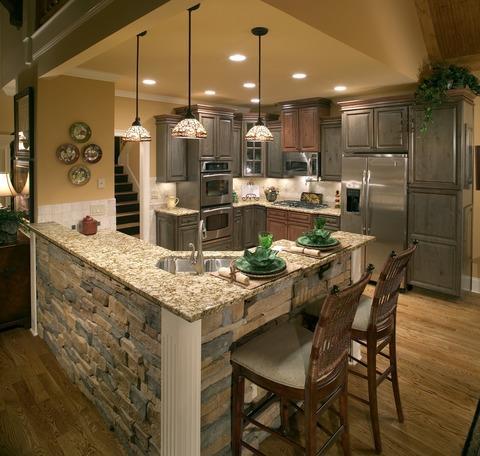
As the nutritional hub of your home, the kitchen highlights and defines your nutritional and existential lifestyle in terms of functional work space, household hygiene, and dining ambiance. In order to fulfill all your functional and aesthetic needs, the kitchen should satisfactorily accommodate the cooking needs for the entire household, offer ample storage space, and feature a spacious, cozy and tantalizing dining space. When planning for a kitchen remodeling project, you should ensure that the desired layout style and decor matches, and even complements your home’s architectural motif and sets a dynamic tone for both formal and informal dining events. After considering the “ordinary” home remodeling factors like budgeting and project needs, goals and objectives (based on your personal lifestyle and preferences), you should shift your attention to the following issues.


Size


After highlighting the reasons/objectives for your kitchen remodeling project, you should now focus on the space usage/implementation. Ordinarily, kitchens are among the smallest rooms in a home. The first consideration during a kitchen renovation project is the amount and the planned usage of the available space. The size of the space will determine the final kitchen design and layout. In order to optimize space usage, you will need to analyze the existing and planned project design plans, styles, and features. Essentially, every inch of space, especially in a tiny kitchen, is vital. It is advisable to consult a professional designer or plumber to assist you in the intricate “economics” of space distribution. For instance, look for a competent and reliable DC plumbing company that offers kitchen remodeling/renovation services if you live in the Washington city area. Take time to discuss your remodeling project with these experts in order to get a realistic and practical solution to all your design predicaments.


Layout


dc-kitchen-remodeling


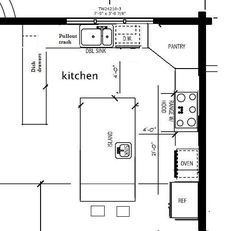
Before you begin the kitchen remodeling project, you should consider and draft both the existing and planned space layouts. Although it is defined as a rough draft, a representative space layout should include accurate measurements and indicate specific features and installations for the entire space. Feel free to experiment with bold layout designs and styles that surpass the existing layout. Before you settle for a certain type of layout, consider the following factors: maneuverability/movement in the kitchen, functional capacity and viability, and the suitability for modifications or extensions. For instance, if you get “trapped” within the existing layout (maybe due to “immovable” walls and doors), implement innovative modifications like the curved or horseshoe layout to increase countertop space and free-space capacity, and to enhance functional efficiency.


Infrastructure And Appliances


In addition to considering the size of the existing kitchen space, you should also take into account the nature of the existing kitchen. In this case, “the nature of the existing kitchen” refers to the physical condition and age of the old kitchen. If the existing kitchen features very old plumbing and electrical systems (installations, fixtures and appliances), you must consider the inherent need, cost, and value for a full makeover of these systems. Old or infrequently maintained houses might have other contentious structural problems like sagging roofs, leaking floors and ceilings, and crooked walls, and you have to consider their refurbishment requirements. If you consult a professional for your home remodeling, you will be advised regarding the most cost-effective and convenient solutions and upgrades for all the infrastructural anomalies in your house.

3 Budgeting Tips For Any Home Remodeling Project

The successful implementation (start, continuation and completion) of any home remodeling project depends on the size, accuracy, and viability of the project budget. Incidentally, you can assess the feasibility of any given home renovation project, such as partial remodeling projects like bathroom and kitchen remodels or full home makeovers, by comparing the actual cost of the project with the available project funds — a deficit causes the project to stall. In other words, the fate of any home remodeling project is usually determined by the project budget. Evidently, a home remodeling budget is crucial to project success and hence the process of creating the project budget must be one of the most important steps in the project. As such, you should take time to carefully plan and create the budget in order to guarantee a smooth project implementation process. By considering the following tips, you can create a realistic, accurate, and functional budget for any type of home remodeling project.


Setting The Budget


plumber-dc


The first step requires you to decide the amount you want or intend to spend on the remodeling project regardless of specific project features. In this instance, you have to highlight a ballpark figure of the actual amount that you have (or will) set aside for the entire project. You do not necessarily need professional assistance to make this decision — it all depends on the proposed project size, and your itemized household budget and current financial status. Remember that you have to stick to this budgetary allocation in all your project plans and activities. In other words, the budget will control the project and not the other way round. The estimate project budget will assist you in planning and prioritizing for your renovation project. By operating within the budget, you will be forced to merit function over beauty during the elaborate planning phase in the next step.


Cost Breakdown And Contingencies


Without exceeding the project budget indicated in step one, you are now required to split/divide/allocate the consolidated funds to specific project elements including plumbing materials, labor, installations, and fixtures. Certainly, you need to create a representative project layout and design to help you allocate itemized expenses based on specific project renovation features and preferences. To complete this step insightfully and realistically, you are advised to consult and seek the advice of a well established plumber in your area of residence. For instance, you can look for a professional and reputable DC plumber if you reside in the Washington locality. Before you breakdown the entire budget, you should set aside a reasonable fraction (usually 20%) of the budget to cater for miscellaneous/unforeseeable expenses. At the end of this step, you will have a detailed, itemized budget that is both accurate and pragmatic.


Financing The Project


Now that you have a detailed budget featuring all your project costs, you need to consider an appropriate source of these funds. Depending on your financial standing and your investment preferences, you can consider any of the following financing options: home equity loans, personal loans, cash, retirement/pension plan loans, and refinancing. Even if you have cash at hand, the most recommendable option is a home equity loan because it’s usually low interest and tax deductible. For all the mentioned loan options, consider their interest rates, the qualification merits, and the processing period, before choosing the most cost-effective and convenient financing option.

5 Major Steps To A Successful Kitchen Remodeling Project

Figuratively speaking, the kitchen is the heart of the entire home. Just like a biological heart, the kitchen “nourishes” the entire household with food. Therefore, the kitchen should be taken very seriously. If you decide to remodel/renovate your kitchen, whether it’s a full home remodeling or a partial (just the kitchen and maybe some other rooms) makeover project, there are some vital issues that you will have to keep in mind. All these issues can be compressed into the following five steps, which you should follow in order to have a successful kitchen remodeling project.


Project Scope


The first step towards a successful kitchen remodeling project is the actual consideration of the scope of the entire project. In this phase, you have to answer several pragmatic questions in order to gauge the actual nature of the project; and hence determine the feasibility of the project. For starters, you have to decide whether the new kitchen will fit into the space formerly occupied by the old kitchen or if it will require addition space. To estimate the scope of the project accurately, you will need to factor in your project needs and goals. In addition to playing a crucial role in the next step, this step will also help you determine whether you need professional services for the project.


Project Planning


The next step will involve the actual planning for the entire project, which is the most intensive phase of the project. In most cases, it is advisable to consult a professional plumber from your locality to guide you through the planning phase. For instance, if you are a resident in Washington, consult a reputable plumber in DC for assistance. To start with, you have to craft a rough design of all the functional and aesthetic aspects of the new kitchen. After establishing the scope, you will come up with an accurate floor plan and then use it to plan for each and every installation and fixture in the room. To come up with a practical plan, you need to consider the functional aspects of each of these features. Finally, create a realistic budget that includes marginal price differences, overruns, miscellaneous costs, and overhead expenses.


Project Design


dc-kitchen-remodel


With everything planned and budgeted for, now you can draft the actual design of each installation and fixtures. However, the design plan will be based on the desired remodeling style — make sure to figure this out first. You can then start creating the designs of countertops and cabinets, depending on your storage needs — otherwise ensure ample space. Select and allocate practical construction materials for all installations including floors and walls — go for durable, economical, and easy-to-maintain.


Acquiring The Materials


Now that the whole remodeling project is virtually in place, you can buy all the items that are needed for the project according to your budget. Go shopping for kitchen installations, plumbing fixtures, lighting materials, appliances, cabinet accessories, and any other practical materials that you will need. Try to stay within your budget without undermining product quality.


Project Launch


After acquiring everything you need, you are now ready to launch the project. Vet and hire a professional plumber and set the project start date. Prepare the kitchen space by disconnecting all its “links” to the other rooms. Remove any valuables and then call in the plumbing team to start work.

Splurging And Skimping Tips For Your Bathroom Remodeling Project

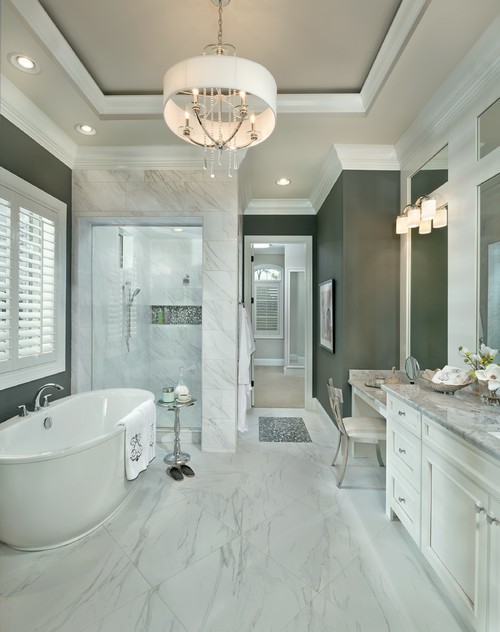
Like in any other project, budgeting is an integral activity in a bathroom remodeling project. During the project planning phase, you must create a realistic budget featuring itemized expenses for all project materials, service charges, and any other miscellaneous expenses — giving the total expenditure for the whole project. Generally, there are three types/classes of bathroom remodels as dictated by their budgets: upscale/luxury (excessive budget), standard (basic budget), and downscale (tight budget). When creating a standard or downscale bathroom remodeling budget, you must prioritize functionality instead of aesthetic appeal. In other words, you should channel more resources (splurge) towards the functional features of the bathroom like the plumbing fixtures and skimp on embellishments like tile designs. In order to create a reasonably attractive, utilitarian bathroom, follow these spending tips.


Countertops


Choose an economical, sturdy, and easy-to-maintain surface material for countertops. This means that instead of going for granite or even quartzite, you can opt for a granite-like laminate. Unless you want to make a statement about your entire design style with your countertops, you don’t have to splurge on them.


Cabinets


Cabinets are some of the most functional installations in a bathroom. Therefore, splurge on cabinets, otherwise they will not last. If you use cheap low quality materials for cabinets, the wet and humid conditions will destroy them in a short time and then you have to replace them at an extra cost — it’s financially illogical.


Walls


Do not splurge on walls; you can still enhance their aesthetic appeal by being a little bit creative. You can choose specific sections for targeted tile decorations instead of using expensive tile patterns to decorate all the walls. For instance, you can do a classic mosaic tile pattern on one shower wall and then cover the rest of the bathroom in economical, durable, and functional plain white porcelain tiles.


Floors


Floors do not need to be expensive at all — just make sure that the shower tiles are rough-textured and have large grout lines to ensure traction. Instead of spending on expensive tile designs, you could install electric heated floor mats for comfort.


Fixtures And Finishes


plumbing-repairs-dc


Regardless of the budget, it’s all about quality when it comes to plumbing fixtures. For showers, toilets, and faucets, choose a durable model with an enduring finish to ensure excellent water flow and to avoid imminent replacements. Depending on your budget and personal preferences, you can choose to install either a rain shower head or body sprays — just choose the best quality. You should be even more concerned about quality when buying faucets than showers because faucets are used more frequently. Due to budget constraints, you might need to consult an expert plumber in your area for advice on the best fixture models within your price range. You can find a professional plumber by searching the internet using terms like DC plumbing repairs, if you live in Washington.

Buy a soaker bathtub instead of splurging on a large-size, spa tub — also, one tub is probably enough for the whole house. Finally, settling for one vanity sink can help save money on all the associated fixtures and accessories for an additional sink. One sink is quite adequate — and enables you to expose a sizable section of your beautiful countertop. As far as fixture materials go, chrome is the most economical and durable plumbing finish for your fixtures, such as showers and faucets.

4 Crucial Factors For Choosing Durable And Stylish Bathroom Countertops

Bathroom countertops highlight the functional and aesthetic attributes of the entire bathroom. In addition to being tasteful and jaunty, modern-day countertops must also be hardy and enduring. In this light, you are advised to install countertops that can withstand abrasion by objects like hot curling irons and resist staining by substances like soap, grease, water, and cosmetics among others. This means that the appropriate material must maintain its freshly polished look for many years to come — by resisting disfigurement and discoloration. In addition to being durable, the countertop should also be affordable and easy to maintain. The following tips will assist you in choosing an elegant and long-lasting countertop during a bathroom remodel/renovation.


Materials Selection


dc-bathroom-remodeling-services


The key to choosing trendy and robust bathroom countertops lies in the choice of surface materials. In addition to the functional attributes mentioned above, your budget and taste will play a huge role in determining the most suitable materials for your bathroom countertops. For instance, if you have an ample budget and wish to project an elegant and plushy outlook, your best choices are either granite or other natural stone materials like marble. On the other hand, if you have a tight budget but wish for a versatile and mildly tough surface, you can choose laminate finishes, composite marble or solid surface materials. You can also use sealed wood vanity tops to render a natural and genuinely appealing design style, or you could use ceramic tiles, which are economical and high maintenance, to create tasteful design patterns.


Decorative Edges


Bathroom countertops can be customized and embellished by applying decorative edge finishes on their surfaces. There are many types of decorative edges including bevel (angled), bullnose (rounded), square, and ogee(S-shaped) edges. The type of countertop surface material dictates the type of edges that should be applied to the installations in a given setting. In order to maintain a consistent and expressive design style, edges should be designed and applied to match or complement the theme of the moldings or the entire bathroom décor style. For instance, plain bathroom styles can be customized with clearly defined square edges, while classic themes can be enhanced with front edge details and heavy ogee edges to complement the moldings.


Vertical Height


Modern countertops are taller than ancient ones due to positive evolutionary changes in people in terms of height. Typically, the height of countertops has increased from 28 inches to between 32.5-34.5 inches in height. Taller vanity tops are comfortable, majestic and highly structured making them easy to use and maintain. Many plumbing companies offer useful advice regarding the size and layout of various bathroom installations and fixtures. You can consult any reliable plumbing company in your state. If you live in Washington, contact any reputable company that offers consultations with their DC bathroom remodeling services for advice on these matters.


Organization And Storage


Like kitchen countertops, bathroom countertops can lose their aesthetic appeal due to disorganization and clutter problems. In order to display the color, style and design pattern of the vanity top, it should be kept as free and unoccupied as possible. You require an effective and customized storage plan to achieve this. Start by assessing your storage needs before you embark on your bathroom remodeling project. With a realistic estimate at hand, you can now plan and install adequate cabinets to store most of your toiletries, leaving the dainty surface free and visible.

5 Useful Tips For Buying A New Toilet

A toilet is perhaps the most unappreciated but vital plumbing fixture in the entire home. Honestly, most people appreciate the presence of a toilet only when they need to use it. Anyone who has ever experienced a serious clogging problem, where you have had to use your neighbor’s toilet, realizes just how important a fully functioning toilet is. Doubtlessly, every good home needs good toilets. Whether you are planning a bathroom remodeling project or you just want to replace or upgrade your toilets, you need to consider several factors. The following tips are very crucial when choosing a new toilet.


Type


plumbing-services-dc


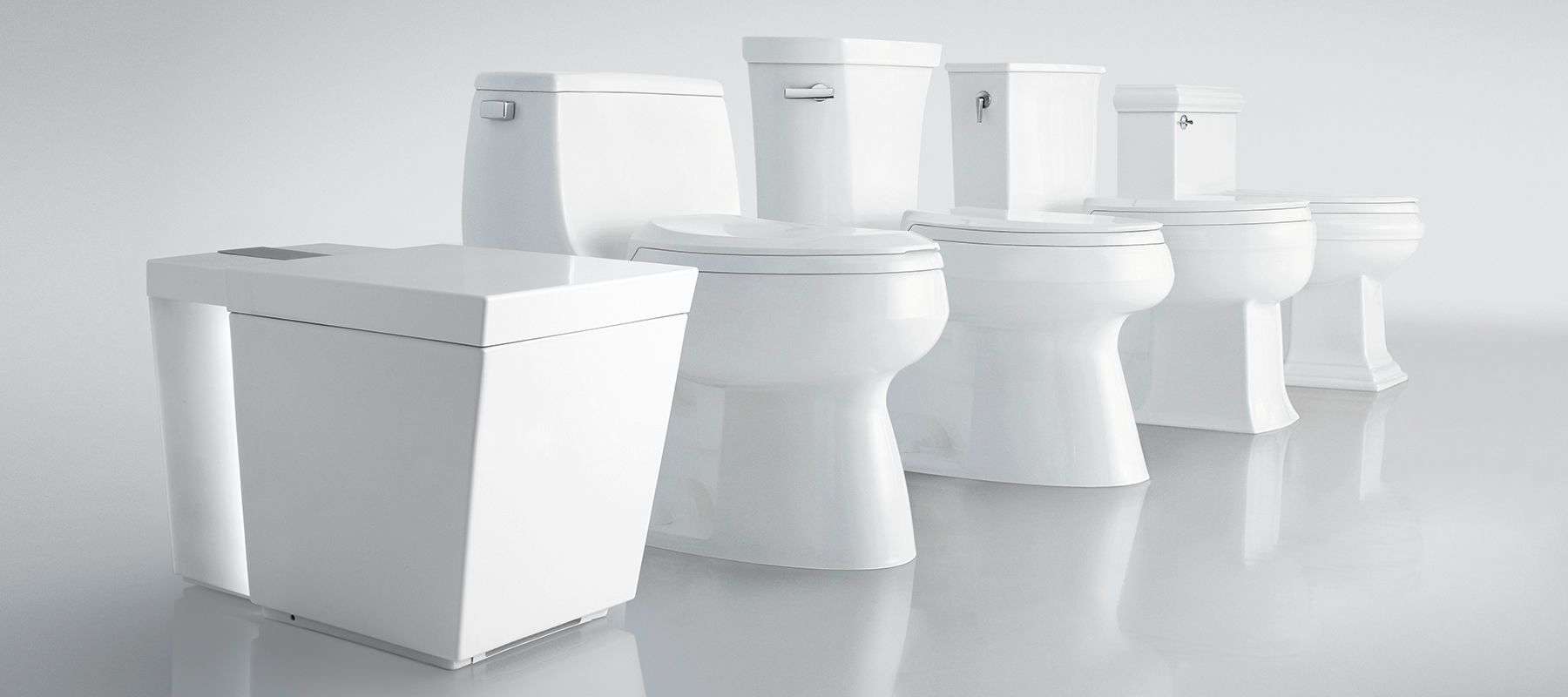
There are numerous toilet types and models in the market today — perhaps too numerous they can even confuse a buyer. There is the traditional two-piece toilet that has separate bowls and tanks; making it easy to install and durable, but difficult to repair. With no seam between the bowl and the tank, one-piece toilets are the modern version of the two-piece models. They are sleek and hence more expensive. Round-front bowls are the snub-nosed toilets that came before the pear-shaped elongated bowls of today. They maximized bathroom space, while the latter offers the user extra space. Designed for limited mobility, long bowls that stand 17-19 inches off the floor are now popular among the elderly than the conventional standard bowls that stand at 14-15 inches. While partial foot toilets leave a small space that can be used for retrofits between the bowl and the back wall, solid foot toilets are affixed to the back wall. Tanks in wall-mount toilets are installed inside the wall cavity — reducing space usage; while tankless toilets flush directly with supply line water and may need pumps to increase pressure. Finally, toilets come in many different colors; but white is the most dominant. With so many choices, you might require help to choose the most appropriate one for your home. Search for a professional plumber in your area for assistance. For instance, if you are in Washington, search for any well established company offering DC plumbing services, they will be happy to help.


Flushing Power And Efficiency


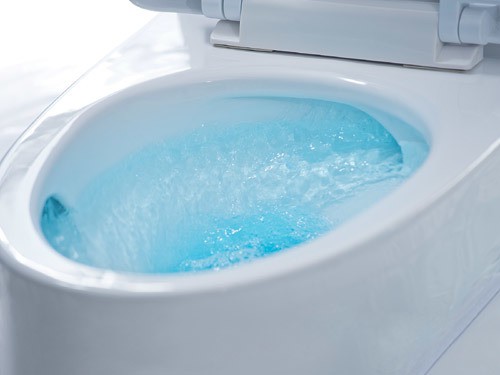
There are three main types of toilet flushing mechanisms. Gravity-fed toilets move water from the tank to the bowl using gravity, creating a siphon that sucks waste into the sewer. Pressure-assisted toilets have sealed internal tanks that generate air pressure as water fills up. Flushing them releases the pressure downwards creating a forceful wave that sweeps the waste away. Finally, power-assisted toilets are a modified version of the pressure-assisted models — they have a small horsepower electric motor to enhance the air pressure and hence the flushing power. High-efficiency toilets and dual-flush toilets are efficiency enhanced models that are modified versions of any of the aforementioned mechanisms.

Accounting for almost 30% of all indoor home water use, toilets are water guzzlers. Before buying a toilet, ensure that it has fulfilled EPA’s water efficiency standards by checking for its WaterSense certification. You will save a lot of water in your home with such a toilet.


Toilet Seats


Like all other toilet accessories, toilet seats have evolved in design, model, and price, but mostly in functionality. Compared to the traditional toilet seats that were designed to only serve their basic functions, modern toilet seats are just marvelous. Heated seats use thermostatic controls to warm the seat to your desired comfort level. Bidet seats have many features including warm water, dual water jets, warm air for drying and even motion-activated lighting to illuminate the toilet. Slam-less lids close softly and noiselessly, while quick-release hinges enable you to remove the seat conveniently for cleaning. Finally, antimicrobial coatings contain silver, which prevents microorganisms like bacteria and fungi from growing under the seat.

4 Floor Ideas To Consider When Doing A Bathroom Remodel

Like any other major bathroom feature, the flooring complements the entire design theme and defines the personality of the bathroom. Depending on the preferred bathroom style, it is always advisable to consider a variety of factors, such as cost, material, color, quality, and aesthetic appeal among others, before choosing the type and style of flooring and walling surfaces for your bathroom. Also, you must assess various floor ideas during a bathroom remodeling project in order to choose a safe, economical, and durable floor type and a style that is classy and tasteful. Doubtlessly, tiles are the most popular floor and wall surface options. However, there are also other recommendable options that can suit specific project themes. In this light, consider the following flooring ideas before launching your bathroom renovation project.


Tile Ideas


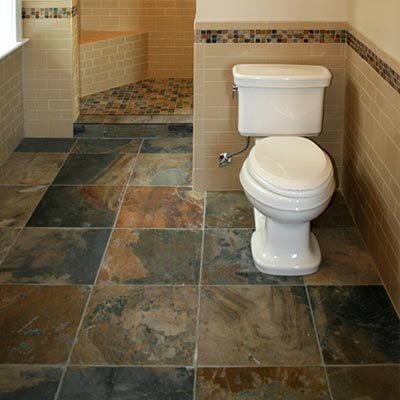
Tiles are made from either natural stone or its imitative alternatives; ceramics or porcelains. Floor tiles are larger and more textured than wall tiles to prevent slippage. Their aesthetic appeal is enhanced by embellishing their neutral/mute colors with distinctive surface and layout designs to match or complement the desired room ambiance. Honed or sandblasted natural stone floor tiles offer more traction than their polished counterparts in wet conditions. On the other hand, slate tiles project a richly organic tone, while travertine tiles appear soft, warm and attractive.


emergency-plumber-in-dc


Other Surface Options


In addition to tiles, there are several other flooring options that can come in handy during a bathroom renovation exercise. Hardwood floors are recommended for a rustic design style. They should be used to match the rest of the house and must be sealed to prevent moisture seepage. Basic vinyl is a highly affordable option that is easy to maintain and clean. If you decide to go with carpets, choose special rugs that have a backing to prevent water from seeping into the padding. Choose carpets that are water-, moisture- and stain-resistant; and hence immune to mildew growth. Consider carpet tiles that are easily detachable and removable as single panels to make cleaning easy.


Heated Floors


As mentioned above, tiles are the most common, robust, and affordable surface options for both floors and walls. They are also readily available, beautiful and easy to maintain as compared to other surfaces. However, tiles have one downside — they become very chilly within a very short time. Fortunately, this problem can be fixed quite easily using radiant floor heating systems; hydronic or electric. In a hydronic radiant system, the floor is warmed by hot water flowing through a rubber tubing that runs underneath the floor. Electric heating systems require a thermostat and a timer for controlling a thin electric-heated panel with a heat-resistant cable that is installed underneath the floor. Electric systems are more economical and easier to install than hydronic ones. When installing radiant systems, it is best to consult professionals, and a good idea to hire them. Hiring professionals, unless you are experienced at the task at hand, can save having to later make a call to a DC emergency plumber if you live in that locality, when things go awry.


Bold Tile Designs


Many expert plumbers and professional bathroom remodeling companies are experimenting with bold floor tile designs to create exquisite floor styles. For instance, you might consider trying out the “contrasting size” design style, where you combine small tiles with large ones to create a fantastic surface pattern. Alternatively, you can opt for the “multiple shapes” combination design, where octagonal, oval, hexagonal, and circular tiles are incorporated into a regular or random design pattern to create an incredible magnificent theme.

5 Insightful Comparisons Of Materials For Bathroom Countertops

Bathroom countertops must be strong enough to withstand various hazards and maintain their original appearance and qualities. They should also feature classy, cosmetic colors and artistic design patterns to enhance their aesthetic appeal. In order to satisfy all these conditions, you must be very careful and perceptive before buying any materials for your bathroom countertops. There are several types of materials that are highly regarded for bathroom countertops — all the major options are discussed and compared below.


Granite vs. Other Natural Stone


Although natural stones like granite and marble are still considered high-end materials, their prices have dropped significantly over the years. Available in many different shades and finishes including polished, satin and honed, granite now comes in many grades that are quite affordable even for a standard bathroom remodeling budget. Although granite is susceptible to grease staining unless it’s properly sealed, it’s more stain-resistant than the softer and more porous marble, limestone, and soapstone.


Natural Stone vs. Engineered Stone


Engineered stone countertops are maintenance-free and more durable as compared to natural stone vanity tops. They are also available in many colors and finishes natural stone creations. Like the other natural stone options, engineered materials cost the same as granite countertops.


Solid Surface vs. Composite Marble


Solid surface materials like quartzite are popular vanity-top choices. The easy to clean and dry material, is stain resistant, seamless, durable, and is available in many colors and shades. However, unlike natural or engineered stone, solid surface can’t stand heat or wear. Originally, composite marble was made from marble and polyester resin. Nowadays, it looks like solid surface but lacks in durability — it is recommended for tight budget remodels.


Concrete


dc-bathroom-renovations


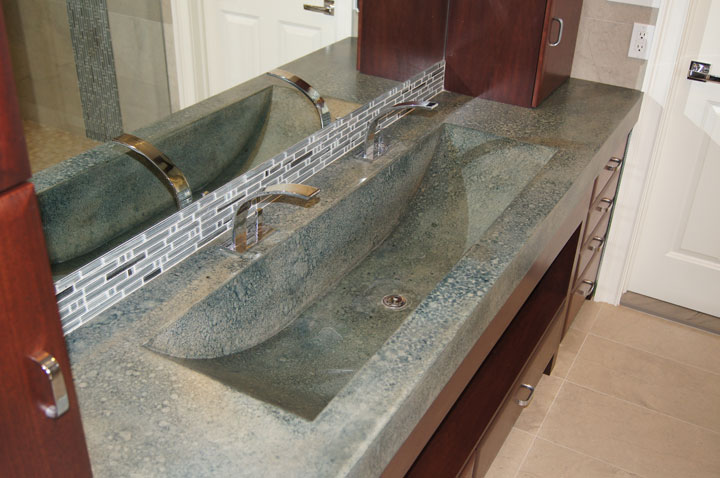
Concrete is a favorite material for creating full customizable bathroom countertops. The highly economical material allows you to embellish your vanity top and sinks by shaping decorative edges in any desired way, and adding creative inlays and colored pigments. On the downside, concrete is easily discolored and you are advised to seal and wax your countertop with paste 2-4 times per year and every 2-3 months respectively. Many plumbing companies recommend solid surface and concrete as suitable countertop materials. Consult any company in your area that provides such services for advice. For instance, any professional company in Washington DC that offers bathroom remodeling and DC sewer services will b e able to assist you properly with a bathroom remodel if you live in this locality.


Other Materials


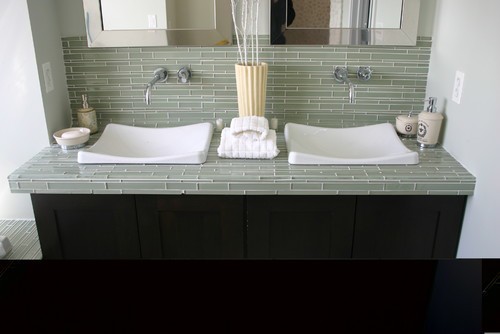
Other viable materials include: laminate, tiles, tempered glass, and wood.

Laminate is a vanity top material that is offered in a variety of finishes including granite and solid surface lookalikes. It is cheap, versatile, water-resistant, and stain-proof; but is vulnerable to heat and wear.

Tile surfaces are available in a vast range of finishes (natural stone) and colors (ceramics) — they can be artistically installed to create breathtaking patterns. However, tiles are high maintenance surfaces because they trap a lot of sludge in their grout borders.

Although it fits well in contemporary bathrooms, the edges of tempered glass countertops must be thoroughly polished — even then, it’s not recommended for kids’ bathrooms.

Finally, wood surface countertops are a recommendable choice, especially if you wish to project a cozy, attractive and organic design theme. However, wood is porous and must be properly sealed to prevent rot caused by water seepage.